Your Cross Will Carry You: Finding Purpose after Major Life Changes
The heart of the metaphor
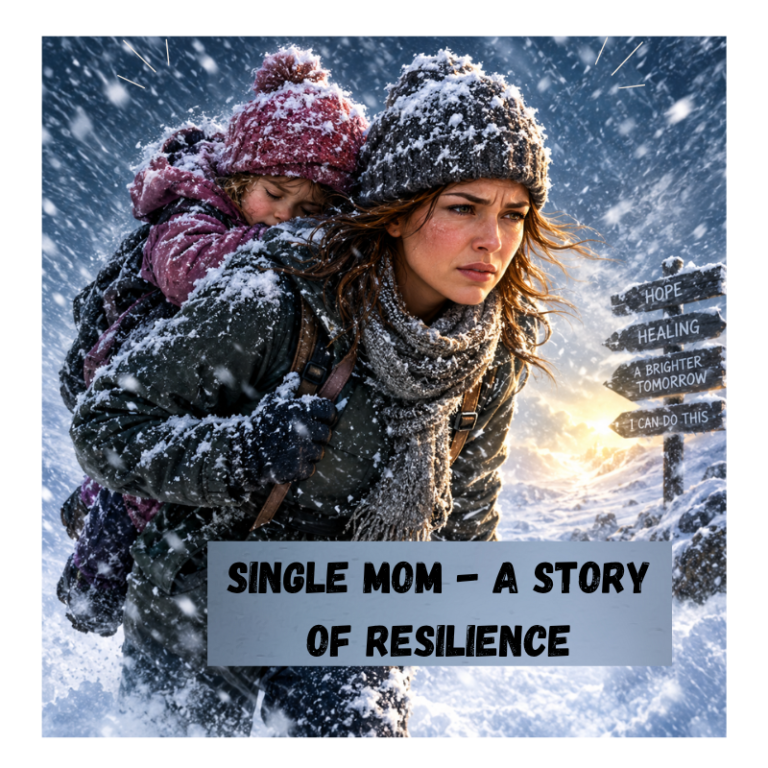
“Your cross will carry you” is not a command to accept suffering silently or to remain in a harmful situation. It is a way of noticing that responsibility can sometimes help us find strength for the next step.
Introduction to my current circumstance
Sometimes a major life change leaves us standing in a quiet place, wondering who we are now and what purpose could possibly come next. I have learned that finding purpose during a transition rarely happens all at once. Sometimes, your cross will carry you—not because suffering is required, but because a meaningful responsibility can give your next step direction, again, like it did in the past.
This is a reflection on purpose and perseverance, on the empty nest transition, and on the slow work of coping with change. It is also a reminder that when one season ends, a new purpose may be waiting in forms we do not yet recognise
A Remembered Story of Courage and Responsibility
When I was in my twenties, I remember hearing a story connected to a World War II border crossing from Germany into, Poland, if I remember correctly. I cannot present it as a fully verified historical account, and some details have grown less certain with time. I especially do not know the exact number of hours the people in the story walked. What has stayed with me is its picture and the purpose of carrying a cross.
The story spoke of a group following a hidden path toward freedom. Their guide was determined not to leave anyone behind. Among them was an older man, and he was informed from the beginning that old people are not allowed to walk, as the Germans have found all the other border crossing paths, and that the guide will at no cost let this last path be found.
An old man promising that he is strong enough
The old man promised that he is fit enough to walk the path. They started their journey, under the cloak of darkness. Half way through the old man started to feel tired, and so he complained of tiredness. The guide just looked at the man and reminded the old man, with a quick, “Nope, you will finish”. Not long after that he become, completely exhausted.
The guide allowed him to rest for 1 minute, then he said,” Come on old man, let’s move!”
Not far from the 1 minute resting place, he felt that he could not continue and wanted to give up. Sitting there on the ground, exhausted, battling to breath, feeling faint, the guide looked at him, and made a crucial a decision.
There was a mother in this group, and she was carrying her baby. Seeing the older man’s condition, the guide took the baby from her and placed the baby in his arms without asking permission, and the guide just informed the old man with, “This here baby is your responsibility now!”
The older man was not happy, and did not want the responsibility of the baby, as now he had someone small and vulnerable depending on him, something that according to him is an unnecessary extra. What the old man was not aware of, was that the guide just gave him new purpose, strength and a responsibility that helped him to keep walking until he reached safety.
I have never forgotten that image. The baby did not erase the danger or make the journey easy. The older man still needed endurance, but the responsibility he carried also gave him purpose to push forward.
Sometimes What We Carry Also Carries Us
The moral I take from this remembered story is gentle rather than absolute: sometimes the responsibility we carry also carries us. A task, a relationship, a calling, or a small promise can give shape to a difficult day when our own motivation feels uncertain.
That does not mean every burden is ours to keep. We are allowed to set down what is unsafe, unhealthy, or more than we can manage. We are allowed to pause. We are allowed to receive care from other people. Purpose is identity, and it is not proved by exhaustion; it grows through connection with God, allowing Him to show you, and coach you into your new future, wise limits, and the courage to be nakedly honest with yourself.
When My Son Finished School, and my best friends moved away, it plunged me into some form of depression.
My own question about purpose became especially real after my son finished school and my best friends moved away to a new state. The house grew quiet and I saved money also, and I loved it, but realised that I was all of a sudden battling to get up in the morning. There were no school pickups, fewer daily responsibilities, and no familiar schedule organizing so much of my time. I was proud of him, of course, but I was also facing a personal transition that felt surprisingly difficult.
I could not just go for tea at my friends house, anymore, as they were no longer there. And it hit me as to how much I was relying on them for companionship.
For years, much of my identity had been connected to caring, planning, encouraging, and showing up. When that role changed, I realised the positive purpose of having the responsibility of rearing a child. I would never have thought that the wishing of not having that responsibility anymore, could have such a purposeful meaning, and be the one thing that gives you the strength to get up in the morning. Finding purpose after your children leave home can feel both freeing and unsettling. Even a welcome change can bring grief for a season.
I did not discover one perfect answer overnight. Instead, I cried a lot, for 2 months to be exact, slept a lot, while trying to move forward in my ministry, learning new skills to start my second business. Each step cleared my path forward, bit by bit, as I could not see the complete path. I could just see enough to move forward and to stay on track. Some days felt hopeful; other days felt awkward and uncertain. I had to be willing to be a beginner again, to study again, and to trust my God more, even though I did not understand.
In the end I just started to thank my God, you know, the attitude of gratitude, for the good and the bad, for the knowing and the unknown. And looking back, in the end, things did work out for the good, and my perspective started to change, that God knows what He is doing, when He allows certain stuff in your life. In my eyes, it is all for growth and you moving toward your destiny.
How to Find a New Purpose When Life Changes
There is no single formula for coping with change, and these suggestions will not look the same for everyone. They are simple invitations for anyone beginning an empty nest transition or another major change in identity, routine, or responsibility.
Allow yourself to grieve a former role. You can be grateful for the past and still miss it. Name what has changed, give yourself room to feel the loss, and resist the pressure to appear completely ready for the next season.
Notice where your experience can help others. The skills you developed in an earlier chapter may still be valuable. Listening, organizing, teaching, encouraging, problem-solving, and caring can become gifts you offer in new settings.
Try one meaningful activity or skill. Choose something that sparks curiosity rather than something that merely looks impressive. Consider ministry, volunteering, a class, a creative project, a new business idea, or a skill you have postponed learning.
Build a simple daily rhythm: be patient and kind to yourself. A small structure can make an uncertain season feel more manageable. Set a regular time to get up, move your body in a way that feels right for you, connect with someone, work toward a goal, and rest without guilt.
Seek support when the transition feels too difficult. Talk. I had to pick up the phone more often to talk to my friends who moved away, plus I made a new friend close to you to go visit on a Sunday evening for a coffee. I started to having more meals with my family, rather than eating alone. I also started to pick up the phone and am talking to my children much more, building friendships that was not there before.